











ICC Duterte Hearing Final Day: Will the Former President Face a Full Trial?
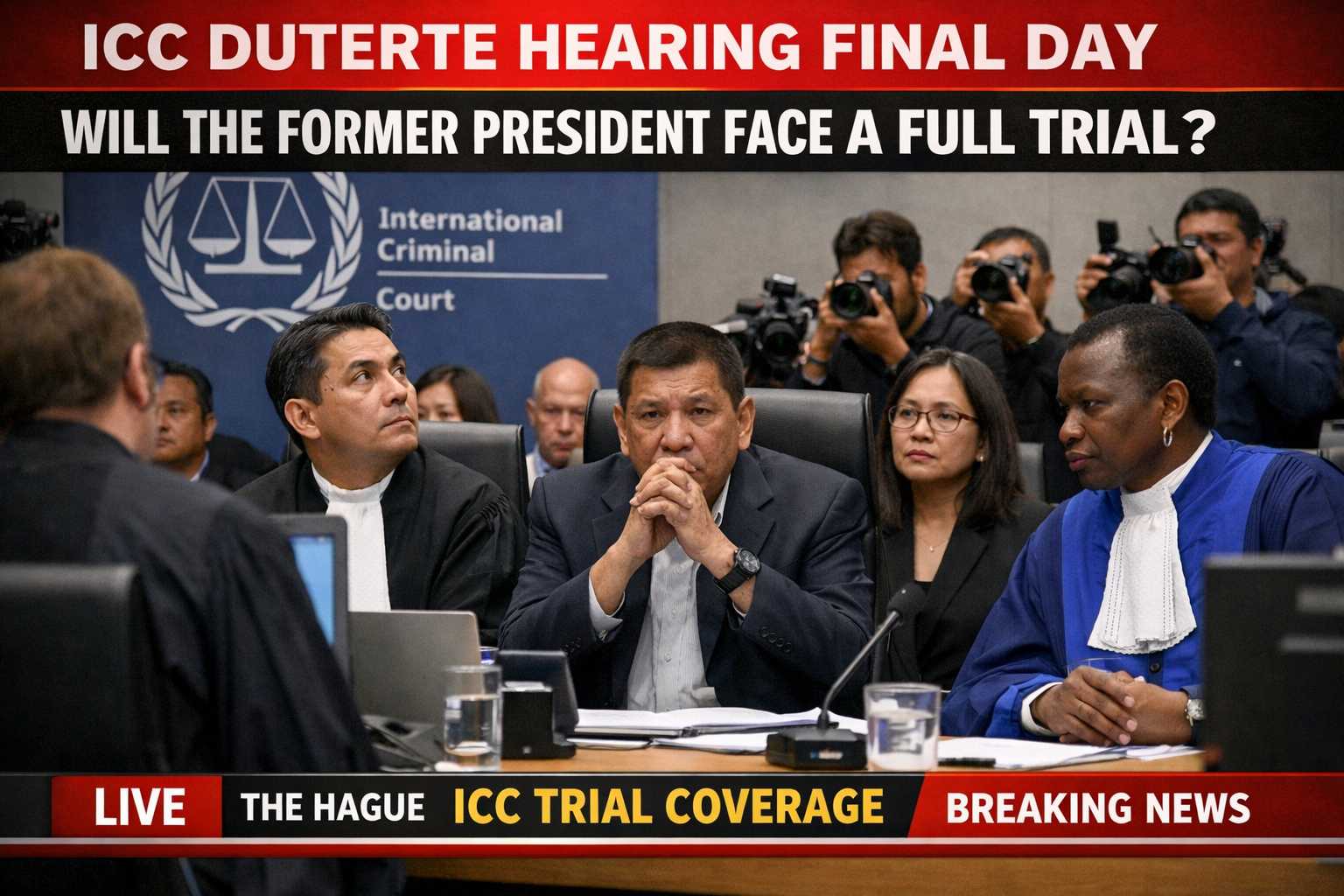
The gavel has finally fallen on the fourth and final day of the International Criminal Court (ICC) confirmation of charges hearing against former President Rodrigo Duterte in The Hague. This week marked a monumental chapter in Philippine legal history, as the Pre-Trial Chamber I concluded sessions to determine if "substantial grounds" exist to push the case into a full-blown trial. While Duterte himself waived his right to attend, his legal team remained steadfast, clashing head-on with prosecutors who painted a grim picture of a systematic campaign of violence that defined a presidency.
The prosecution’s closing arguments were nothing short of a blistering indictment of the "War on Drugs" architecture. ICC Deputy Prosecutor Mame Mandiaye Niang argued that the killings were not isolated incidents of "rogue" police work but were instead a coordinated, state-sponsored plan to "neutralize" suspected drug personalities. Prosecutors relied heavily on insider testimonies, alleging that high-value target (HVT) lists were essentially "kill lists" fueled by a reward system that prioritized body counts over due process. They maintained that the 49 charged incidents are just a "fraction" of a much larger, darker campaign.
In a sharp rebuttal, Duterte’s lead counsel, Nicholas Kaufman, dismissed the prosecution’s narrative as a "wishful and selective reading" of police reports. The defense argued that the term "neutralize" is standard law enforcement jargon for disabling a threat, not an instruction to execute. Kaufman emphasized that in many of the cited cases, firearms were recovered and gunpowder residue was found on the suspects, suggesting legitimate "nanlaban" (resisted arrest) scenarios. The defense urged the judges to view each case through its individual evidentiary foundation rather than accepting a broad "criminal plan" theory.
Beyond the merits of the charges, the courtroom was also a battleground for Duterte’s physical freedom. The prosecution formally opposed any "interim release" for the former leader, labeling him a significant flight risk. They cited his previous statements refusing to recognize the ICC's jurisdiction and his claims of being "forcibly renditioned" as evidence that he might not comply with future court orders. For the families of the victims watching from live streams in Quezon City, this legal tug-of-war represents the closest they have come to accountability after years of waiting.
With the hearings now concluded, the fate of the "Duterte Case" rests in the hands of the three-judge panel. Presiding Judge Iulia Antoanella Motoc has announced that the Chamber will deliberate and issue a written decision within the next 60 days. The court can either confirm the charges and commit Duterte to trial, decline them if evidence is insufficient, or request the prosecution to provide further proof. As the Philippines waits for the April deadline, the world watches to see if the "architect" of the drug war will finally have his day in a full international trial.
What do you think?
0 COMMENTS































Subscribe to our Newsletter for new blog posts, tips & new photos. Let's stay updated!
Leave a Comment