











South China Sea Standoff: China Launches Patrols, Accuses Philippines of Disrupting Regional Peace
A Sea of Shadows and Steel
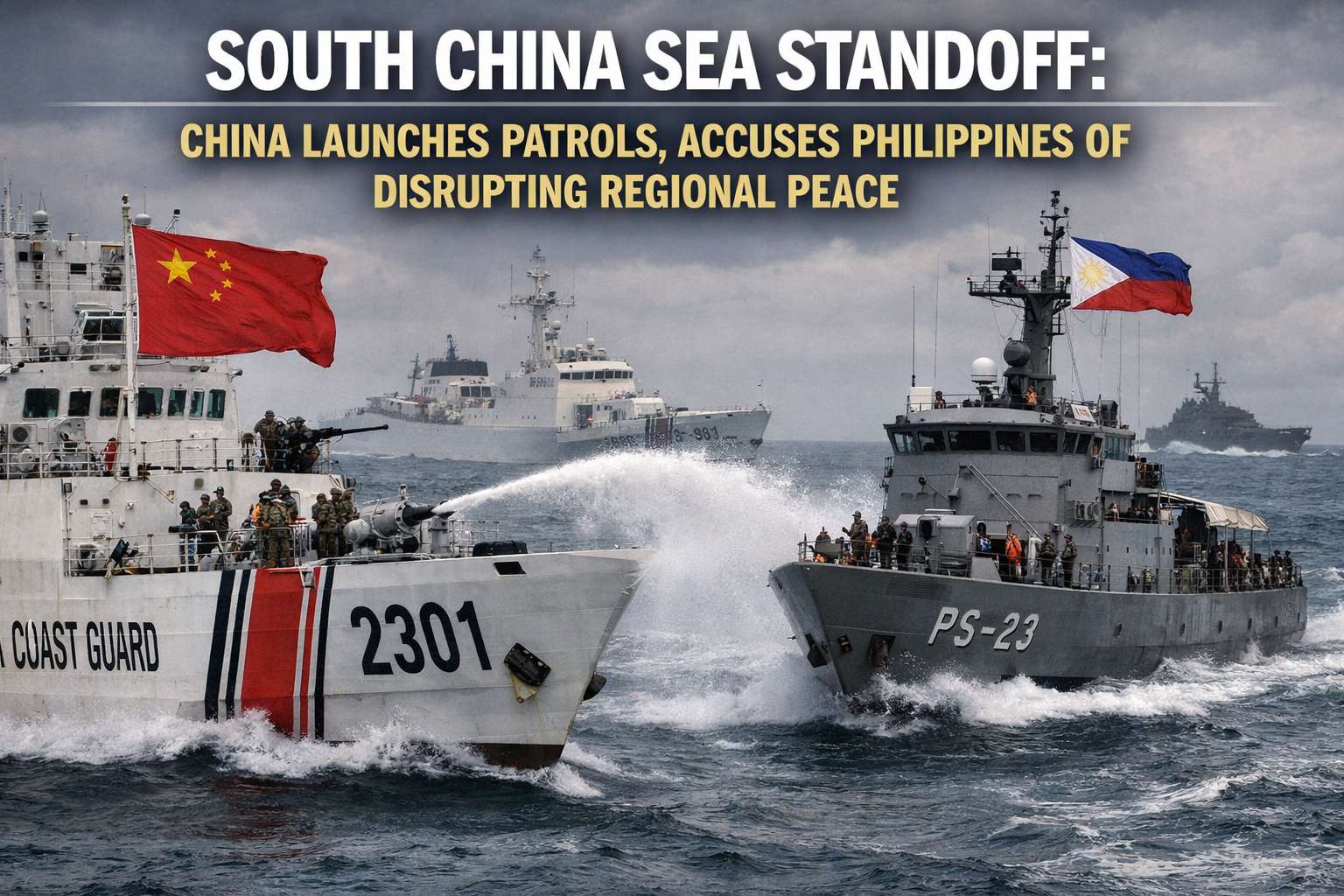
The turquoise waters of the South China Sea have once again transformed into a high-stakes theater of geopolitical maneuvering. From February 23 to 26, 2026, the Chinese People’s Liberation Army (PLA) Southern Theater Command deployed its naval assets for what it termed "routine patrols." This display of maritime muscle serves as a direct counter-signal to the growing military alignment between the Philippines and its Western allies, signaling that Beijing has no intention of loosening its grip on the contested waterway.
The Accusation: "Disrupting the Peace"
In a pointed statement released Friday, PLA spokesperson Senior Captain Zhai Shichen didn’t mince words. He accused the Philippines of "co-opting" nations from outside the region to organize provocative joint patrols. According to Beijing, these multilateral activities—specifically the 15th Multilateral Maritime Cooperative Activity (MMCA)—are not defensive measures but are the primary catalysts for friction, effectively "disrupting the peace and stability" that China claims to uphold.
The Allied Response: Strength in Numbers
While China patrolled, a powerful coalition was forming on the horizon. The Philippine Navy, joined by the United States and Japan, concluded a week-long series of drills that stretched from the South China Sea to the strategic Bashi Channel. Featuring the guided-missile destroyer USS Dewey and the Philippine frigate BRP Antonio Luna, these exercises focused on "interoperability" and "maritime domain awareness." For Manila, these aren't provocations—they are the necessary exercises of a sovereign nation protecting its Exclusive Economic Zone (EEZ).
Shadowing and Sovereignty
The rhetoric on land was matched by tension at sea. Reports surfaced of Chinese Jiangkai II-class frigates and destroyers "consistently spotting" and shadowing the allied fleet. Philippine officials noted that while no direct radio challenges were issued, the presence of Chinese warships within the Philippine EEZ and near the Batanes islands was a silent but clear assertion of dominance. This "grey-zone" tactic continues to test the boundaries of international maritime law and the patience of regional neighbors.
The Escalation Ladder
As 2026 unfolds, the South China Sea remains a volatile flashpoint where a single miscalculation could ignite a broader conflict. China maintains it will "resolutely safeguard" its territorial sovereignty, while the Philippines shows a renewed resolve to invite global partners into the fold. With both sides dug into their respective positions, the "peace" of the region feels increasingly fragile, balanced precariously on the decks of passing warships.
What do you think?
0 COMMENTS





































Subscribe to our Newsletter for new blog posts, tips & new photos. Let's stay updated!
Leave a Comment